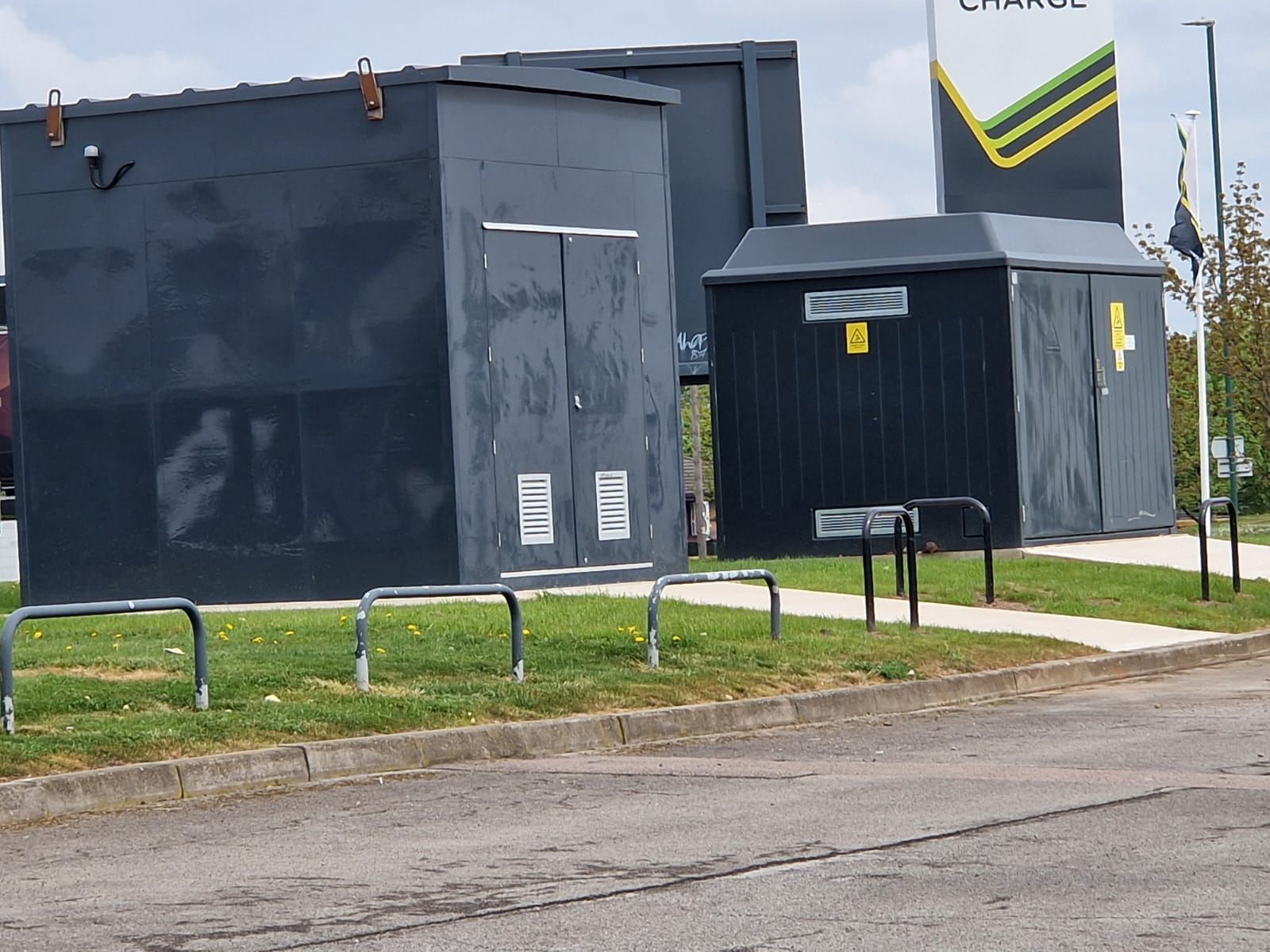
Electrical enclosures play a critical role in protecting electrical and control equipment across industrial, infrastructure and outdoor environments. The correct specification of enclosure protection directly affects safety, reliability, compliance and long-term performance. Two of the most commonly referenced protection standards are IP ratings and IK ratings.
Although IP and IK ratings are often listed together, they address different risks. IP ratings focus on protection against environmental ingress, while IK ratings address resistance to mechanical impact. In addition, enclosure protection has a direct relationship with fire risk, particularly in environments where dust is present.
Understanding how these ratings work, and how they interact with real-world operating conditions, is essential when selecting enclosures for electrical installations.
An IP rating defines the level of protection an enclosure provides against the ingress of solid objects and liquids. IP ratings are defined under the international standard IEC 60529 and are used globally across electrical, industrial and infrastructure sectors.
An IP rating is written as the letters IP followed by two digits, for example, IP65. Each digit represents a specific type of protection. Both digits must be considered when assessing whether an enclosure is suitable for a particular environment.
The first digit indicates the level of protection against access to hazardous parts and the ingress of solid foreign objects, including dust.
0 – No protection
1 – Protection against objects larger than 50 mm
2 – Protection against objects larger than 12.5 mm
3 – Protection against objects larger than 2.5 mm
4 – Protection against objects larger than 1 mm
5 – Dust protected (limited ingress permitted)
6 – Dust-tight (no ingress)
In industrial environments, airborne dust, fibres and particulates are common. As a result, ratings of IP5X or IP6X are frequently specified where contamination of internal electrical components must be controlled.
The second digit defines the level of protection against water ingress.
0 – No protection
1 – Protection against vertically dripping water
2 – Protection against dripping water at up to 15°
3 – Protection against spraying water
4 – Protection against splashing water
5 – Protection against water jets
6 – Protection against powerful water jets
7 – Protection against temporary immersion
8 – Protection against continuous immersion
Outdoor installations commonly specify IP65 or IP66, depending on rainfall exposure, washdown requirements and environmental conditions.
IP54 enclosures provide limited protection against dust ingress and protection against water splashes. They are typically used in sheltered indoor environments or light industrial locations.
IP55 provides increased protection against dust and water jets, making it suitable for semi-exposed installations.
IP65 enclosures are dust-tight and protected against water jets. This rating is widely specified for outdoor electrical enclosures and infrastructure installations.
IP66 enclosures offer dust-tight protection and resistance to powerful water jets. They are commonly used in exposed outdoor locations or washdown environments.
These ratings relate to immersion protection and are generally specified only where submersion is expected.
While IP ratings relate to environmental ingress, IK ratings define an enclosure’s resistance to mechanical impact. IK ratings are defined under the international standard IEC 62262.
An IK rating indicates how much impact energy an enclosure can withstand without loss of structural integrity or protective performance. An IK rating is written as IK followed by two digits, for example IK10.
IK05 – 0.7 joules – Light industrial environments
IK07 – 2 joules – General industrial use
IK08 – 5 joules – Outdoor equipment
IK09 – 10 joules – Public access areas
IK10 – 20 joules – Vandal-prone or high-risk locations
Higher IK ratings are commonly specified where enclosures may be exposed to accidental impact, tool strikes, vandalism, or unsupervised public access.
Although often specified together, IP and IK ratings measure different characteristics.
An enclosure may have a high IP rating but low impact resistance, or high impact resistance but limited ingress protection. Correct specification requires consideration of both environmental and mechanical risks.
Dust ingress is often underestimated when specifying electrical enclosures, yet it is a significant contributor to electrical fires in industrial environments.
Dust inside enclosures can:
In certain industries, dust may also be combustible, conductive, or chemically reactive. Even where dust is not combustible, excessive accumulation can lead to overheating and premature equipment failure.
Selecting an enclosure with appropriate dust protection is a key control measure in reducing fire risk.
In environments with continuous airborne dust, fine particulates or extended maintenance intervals, dust-tight enclosures significantly reduce internal contamination and associated fire risk when combined with appropriate thermal management.
Mechanical damage to an enclosure can compromise seals, gaskets and structural integrity. Once this occurs, the declared IP rating may no longer be effective.
Impact damage can:
Higher IK-rated enclosures help maintain long-term protection by resisting impacts that could otherwise compromise enclosure integrity.
Laboratory testing assumes correct installation, undamaged seals and no unauthorised modifications. In practice, long-term performance depends on material choice, construction quality, gasket design, door and locking systems, installation standards and maintenance practices.
Two enclosures with identical IP and IK ratings may perform very differently over time depending on build quality and operating environment.
In many industrial and infrastructure applications, enclosure protection levels between IP54 and IP65, combined with appropriate IK ratings, are commonly specified.
The standard enclosure range supplied by Exel Grp Ltd includes GRP cabinets and kiosks designed to meet typical IP requirements while offering robust impact resistance for industrial and outdoor environments.
Standard enclosure sizes are available via the online range at:
https://exelgrp.ltd/shop/
Where applications require higher IP or IK ratings, enhanced sealing, increased impact resistance or project-specific performance, bespoke enclosure solutions can be developed to suit the operating environment.
Further information on bespoke design and manufacture is available at:
https://exelgrp.ltd/bespoke-grp/
For guidance on selecting appropriate IP and IK ratings or to discuss non-standard requirements, technical enquiries can be directed via:
https://exelgrp.ltd/contact/
IP and IK ratings address different but equally important risks in electrical enclosure design. IP ratings protect against dust and water ingress, while IK ratings protect against mechanical impact.
Dust ingress can significantly increase fire risk, and impact damage can compromise long-term enclosure protection. Effective specification considers environmental exposure, mechanical risk, dust accumulation, thermal management and long-term operating conditions.
By selecting appropriate IP and IK ratings together, and ensuring quality construction and installation, electrical enclosures can deliver safe, reliable performance throughout their intended service life.